
Knowledge
Developing intellectual abilities, understanding and a lifelong spirit of learning.
A guiding force behind the Saraswati Shishu Mandir and Vidya Bharati educational movement. A life dedicated to education, character formation, service and Indian cultural values.
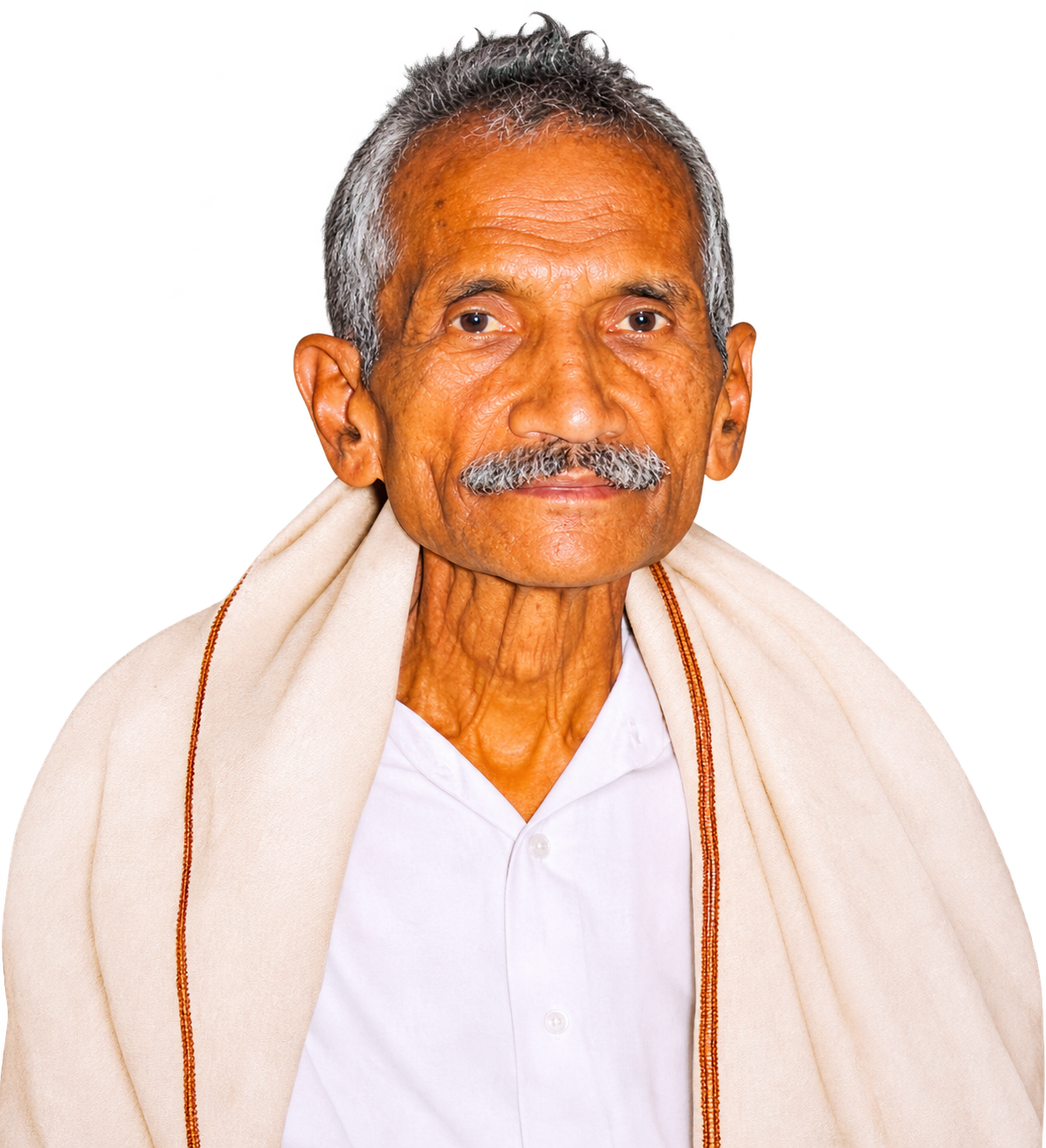
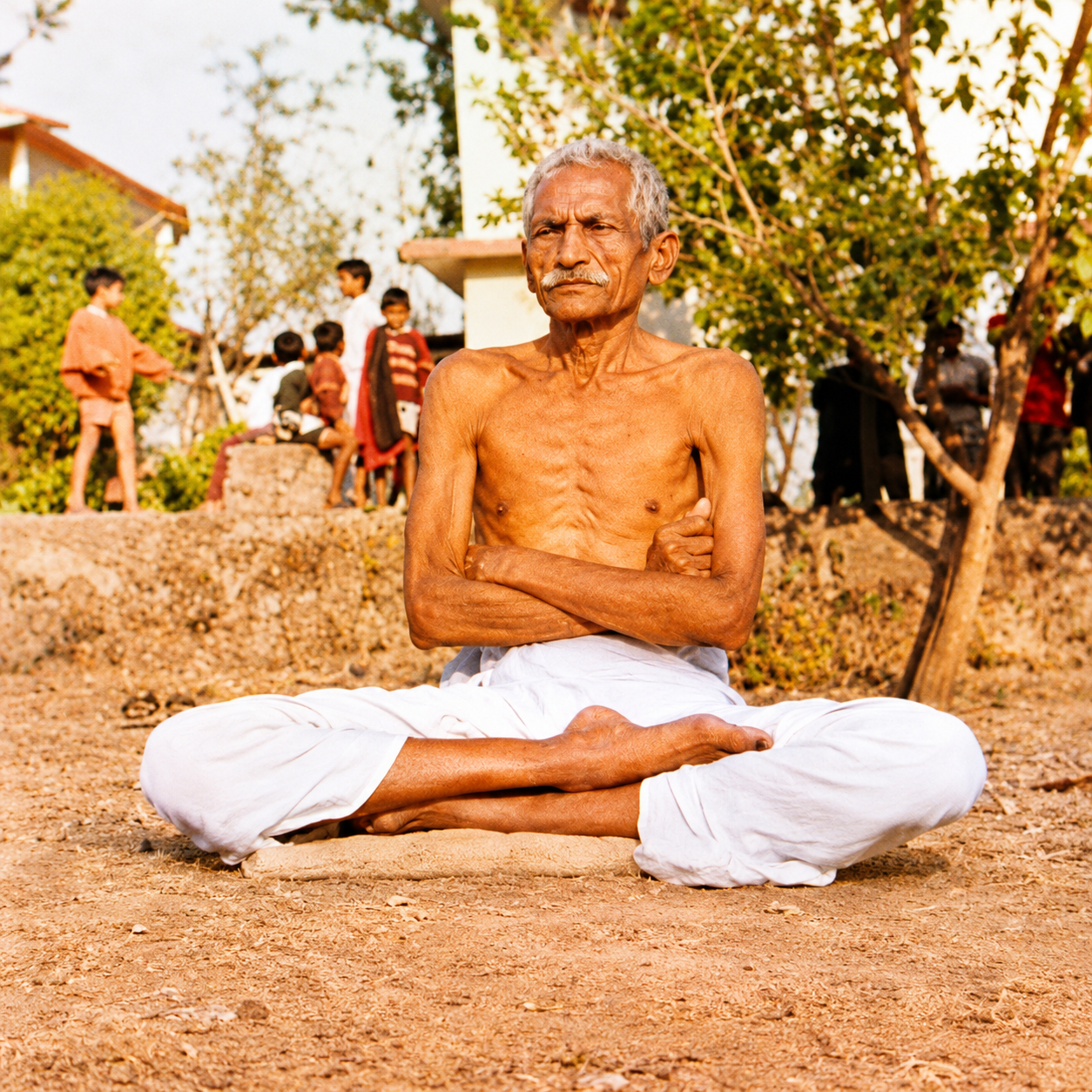
Shri Krishna Chandra Gandhi holds a distinguished place in Indian education, culture and social service. He was a dedicated educationist and organiser who devoted his life to transforming society through education rooted in Indian culture and values.
Born on 11 October 1921 in Meerut, Uttar Pradesh, Gandhi Ji lived a life marked by simplicity, discipline, sacrifice and unwavering commitment to his ideals. He believed that the true upliftment of society could be achieved through an educational system that nurtured cultural values, moral character and social responsibility.
His life represents a sustained effort to build society and the nation through education, character formation and service.
His personal life reflected the values he sought to nurture through education and social service.
From an early age, Krishna Chandra Gandhi was known for his disciplined, simple and ascetic way of life. In 1943, he became a volunteer of the Rashtriya Swayamsevak Sangh. After completing his Bachelor of Arts degree in 1944, he dedicated himself to the work of the Sangh as a full-time pracharak.
He took a keen interest in physical activities such as ghosh, swimming and horse riding. While serving as the district pracharak in Mathura, he once swam across the turbulent Yamuna River during a flood, demonstrating courage and determination.
His educational vision brought together knowledge, Indian culture, discipline and service to society.
Developing intellectual abilities, understanding and a lifelong spirit of learning.
Nurturing character through Indian culture, ethical values and life traditions.
Encouraging courage, self-reliance, self-control and discipline.
Developing a sense of duty towards society and the nation.
Taking educational opportunities to every section of society, especially underserved communities.
Respecting Indian cultural heritage, values and traditions.
An educational initiative that began in Gorakhpur in 1952 gave a new direction to the educational movement.
In 1952, while serving as a departmental pracharak in Gorakhpur, Uttar Pradesh, Krishna Chandra Gandhi, together with Nanaji Deshmukh and under the guidance of provincial pracharak Bhaurao Deoras, helped establish the first Saraswati Shishu Mandir.
It was conceived as much more than a school. It represented an educational vision in which learning would be closely connected with Indian culture, values and samskaras. Children were regarded with deep respect, and teachers, known as acharyas, were entrusted with nurturing both knowledge and character.
The initiative gradually inspired the establishment of similar schools in different parts of the country and contributed to the growth of a wider educational movement.
Important events associated with his life and the educational movement.
Born on 11 October 1921 in Meerut, Uttar Pradesh.
Became a volunteer of the Rashtriya Swayamsevak Sangh.
After completing his BA, dedicated himself to the work of the Sangh as a pracharak.
Helped establish the first Saraswati Shishu Mandir in Gorakhpur with Nanaji Deshmukh.
Worked to safeguard the educational autonomy and continuity of Saraswati Shishu Mandirs.
Vidya Bharati Akhil Bharatiya Shiksha Sansthan was established.
A Shishu Sangam with more than 16,000 students was organised in Delhi. President Neelam Sanjiva Reddy participated.
The Samiti was established at Tezpur, Assam, under his guidance.
He passed away in Mathura on 24 November 2002.
The award was instituted to recognise contributions to Janajati education.
The Foundation was established to carry forward his educational and cultural vision.
The educational approach of Saraswati Shishu Mandir gradually gained recognition, encouraging the establishment of schools in different states. As institutions grew, state-level committees were formed to coordinate and manage their activities.
In 1977, a national body, Vidya Bharati Akhil Bharatiya Shiksha Sansthan, was established to provide a broader organisational framework for the movement. It sought to strengthen education rooted in Indian culture and values.
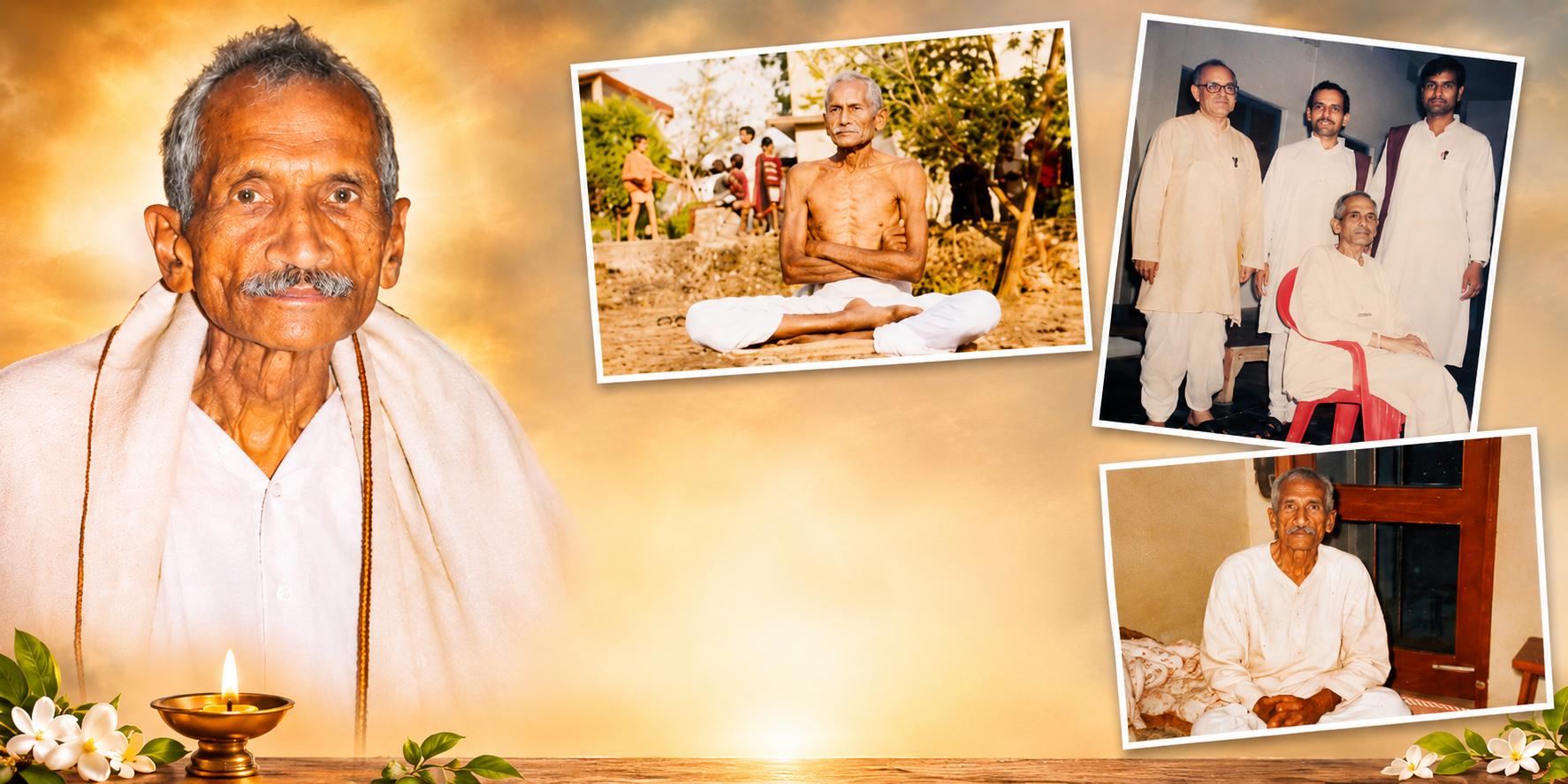
After his work in Uttar Pradesh, Gandhi Ji was sent to North-Eastern India to help expand the Vidya Bharati educational initiative. In places such as Haflong, efforts were made to establish schools and hostel facilities for children from different Janajati communities.
His work extended across Assam, Tripura, Nagaland, Manipur, Meghalaya and Arunachal Pradesh. His efforts helped lay foundations for education in remote, rural, hilly and forest areas.
In 1997, the Purvottar Janajati Shiksha Samiti was established at Tezpur, Assam, under his guidance. It represented an important step towards organising educational work among Janajati communities.
During the Emergency imposed in India in 1975, the educational institutions associated with the Saraswati Shishu Mandir movement faced significant challenges. Under Gandhi Ji's leadership, parents and education supporters organised peaceful efforts to safeguard their educational autonomy.
Following the Emergency, efforts were made to revive institutions that had been disrupted or affected. This period reflected his determination to preserve the educational mission and ensure its continuity.
In 1978, under Gandhi Ji’s leadership, Shishu Sangam was organised in Delhi, bringing together more than 16,000 students. The event became a significant milestone in the history of the educational movement.
The then President of India, Neelam Sanjiva Reddy, also participated in the programme.
His life remained dedicated to education, service and the promotion of cultural values.
Instituted in 2007 in his memory, the Krishna Chandra Gandhi Award recognises individuals who have made notable contributions to education among Janajati communities.
Established in 1997 at Tezpur, Assam, the Samiti works towards taking education to Janajati communities across North-Eastern India.
Established in 2020, the Foundation is dedicated to advancing education, culture, social development and the preservation of life traditions among Janajati communities.
The educational movement that began with Saraswati Shishu Mandir became an inspiration for the wider spread of education rooted in Indian culture and values.
The Krishna Chandra Gandhi Foundation is committed to carrying forward his inspiration through education, culture and social development. Be a part of this journey.
Support the Foundation